Tuesday, 9 April 2013

Short review: Searching for Sugarman

Director: Malik Bendjelloul
(2012)

From the gorgeous opening vistas of a South African coastline, Searching for Sugarman sets itself up to be a very special kind of documentary. Its sublime blend of animation, perfect cinematography and ‘8mm’ footage bestow such a riveting visual display for a film of its genre. Its brilliance reaches beyond its aesthetic with the engrossing story of Rodriguez; the phenomenal 1970’s singer who disappeared after his album flopped stateside. It charts his apparent suicide to his popularity in South Africa where his songs became a cultural phenomenon. And in the final third, Searching for Sugarman falls apart. The filmmakers interview Rodriguez’ friends and bosses in the present day, building up to finding the fabled singer, only to reveal they found him 13 years prior, when he toured South Africa, throwing the entire film out of context. A stunning story wrecked by manipulative and deceitful design.


Monday, 8 April 2013

Monsters Inc review


Mike: I think I have a plan here: using mainly spoons, we dig a tunnel under the city and release it into the wild.
Sulley: Spoons?
Mike: That's it, I'm out of ideas. We're closed. Hot air balloon? Too expensive. Giant slingshot? Too conspicuous. Enormous wooden horse? Too Greek.

Directors: Andrew Stanton, David Silverman, Lee Unkrich
(2001)

It’s an almost surreal experience being able to revisit Pixar films during their infancy after knowing just how successful the company’s streak would turn out. Almost singlehandedly responsible for the second golden age of animation with their pioneering piece of perfection that is Toy Story (1995) the studio has proliferated the use of computer animation to the point where no one does anything by hand anymore. Despite being universally adored by audiences of any age upon release, Monsters Inc critical reception was warm rather than blisteringly molten like Toy Story’s, and even to this day I find this baffling. In a near perfect run of films spanning more than a decade, Monsters Inc is one of the company’s absolute highlights.

Set in the monster populated Monstropolis, Monsters Inc follows Sully (John Goodman) and Mike (Billy Crystal), 2 best friends and employees at Monsters Inc, a factory that collects the scares from children in order to power everyday activities. The factory has doors that lead into children’s closets, allowing the monsters to infiltrate the human world to gather the required ‘scream’ energy that society has become so dependent upon. In a hilarious revelation, human children are considered to be poisonous, with a single touch being able to kill instantly. After a shift one day Sully finds a door left on the factories scare floor and accidently lets a human child called Boo (Mary Gibbs) into the monsters realm. This puts the duo on a crash course with the antagonistic Randall (Steve Buscemi) a malevolent camouflaged lizard who has bold ambitions about the future of the monsters world.

What makes the film work is its genius, high concept idea and precise, entertaining storytelling. The concept of another world inhabited solely by monsters whose way of life is powered by the screams of frightened children might sound like something out of an arthouse horror flick; the idea and its universe are developed sensationally by Pixar’s creative minds. The way the city of Monstropolis functions is so similar to ours, but is flipped on its head by the physical state of its creatively designed inhabitants. A janitor cleans up a trail of slime only to create another when he moves due to being a slug, a monsters tongue is so long it doubles up as a child’s skipping rope and deodorant is based upon foul smells (wet dog anyone?). These quirky aspects of an otherwise relatable society make for some tremendous laughs, as well as establishing just how original the film, and films in general, can truly be.

While both Toy Story’s and A Bugs Life are films that do an excellent job of catering to 2 broadly different audiences, it was with Monsters Inc that Pixar really began perfecting the art of pleasing such a varied audience. Mike and Celia go to a fancy restaurant called Harryhausens and Mike is put off by the idea of yellow snow cones (“they're lemon!”) while younger audiences will adore the slapstick humour and comedic violence. The written gags are razor sharp and are slanted more in favour of entertaining adults than they are of children, and this catering to such a diverse audience is executed flawlessly, making for a cohesive, well rounded feature.


Much like Toy Story 2, Pixar saves one of its strongest moments till last as Sully, Mike and Boo soar through the factory warehouse, using the door track line as a form of makeshift rollercoaster/getaway vehicle from the villainous Randall. Soon the characters are using the doors as portals, travelling to various locales around the world. The chase is visually stunning and totally exhilarating, culminating with an emotionally charged finale that could reduce a grown man to tears. The films flaws (obvious, cliché villain, the usual Pixar buddy comedy routine) are minor, the successes are astronomical. Watch it again on Blu Ray to remind yourself how the Cars films are minor lows in a company that’s only in the business of crafting phenomenal highs.


The Walking Dead Season 3 Episode 15: This Sorrowful Life


!!!!!!WARNING SEASON 3 SPOILERS!!!!!!

CLICK THE LINK TO VIEW

Wallace and Gromit: The Wrong Trousers review

Director: Nick Park
(1993)

There's only very little that needs to be said about Nick Parks Wallace and Gromit the Wrong Trousers, a short stop motion animation that's The Godfather of its genre. After renting out the spare room to an ambiguously sinister penguin, Gromit’s Techno Trousers are integral in the heist of a diamond by the malevolent bird. From start to finish Parks magnum opus is crammed with pitch perfect humour, genius gags and an astute sense of britishness. The low fi charm of Claymation is delightful that enhances every scene with such detail and ingenuity putting everything else similar to shame. And then there’s that climax, a chase on a miniature train track around Wallace’s home as Gromit lays down additional track as the locomotive barrels forward at an alarming and exhilarating rate. Quite possibly one of the greatest moments in the history of film, animation or otherwise.  A true masterpiece.


Friday, 29 March 2013

Garden State review


Sam: Hey, I recognize you.
Andrew Largeman: Oh, did you go to Columbia High?
Sam: No, not from high school, from TV. Didn't you play the retarded quarterback?
Sam: Are you really retarded?
Sam: Ooh, great job man! I really thought you were retarded. I mean, you're better than that Corky kid and he's actually retarded. If there was a retarded Oscar you would win, hands down, kick his ass!


Director: Zach Braff
(2004)
The only reason I decided to watch acclaimed indie film Garden State was for a very ignorant and almost childish reason. It’s the reason why teen girls watch Cronenberg’s Cosmopolis and young women feel the need to watch 2011’s critically revered Drive. The answer? Because the film stars an actor who I enjoy watching. That and Scrubs is a fantastic piece of television. That's right, I watched Garden State solely on the basis of writer/director/star Zach Braff, and this choice was a surprisingly sound one, as Braff’s directorial debut is terrific little film.

The film follows Andrew ‘Large’ Largeman, a little big actor who resides in LA. His career highlight was playing a retarded quarterback in a TV film, but since then the acting well has turned barren. Upon receiving the news of his mother’s death, Large returns home to New Jersey for the first time in 9 years for the funeral that awkwardly collides him with his estranged father (Ian Holm). Soon after catching up with his friends from this previous life he bumps into Sam (Natalie Portman), an incredibly eccentric 20 something who he instantly has a connection to. In the remaining days of his visit to Jersey he attempts to find himself and understand his path forwards in life.


The remarkable themes of self discovery and progress are at the heart of Garden State, and Braff's script tackles such bold subject matter in a remarkably successful way. In different hands the film could’ve veered off into the direction of monologues and nature shots, but the focus is very much on the emotions of the characters. Large feels very isolated in his life, perpetually on medication and unaware of his next move. One hilarious scene sees his new handmade shirt match the wallpaper; a not so subtle metaphor for being lost. Make no mistake, Braff’s direction isn’t particularly subtle, but his choices certainly ring true without devolving into total pretentiousness.

What’s certainly odd to see is Braff in a role that isn’t the recognizable JD from Scrubs. The childish quirks of his medically adept alter ego are missing here, instead Large is filled with a somewhat emptiness. His voice is quiet and movements are reserved, never wanting to be the centre of attention, even when people bring up his successful ventures as an actor. Juxtaposing Large is the oddball attitude of Portman’s Sam, the catalyst in Large’s life that brings him out of his self imposed isolation. Portman certainly pulls it off here by bringing Sam to life and making her simultaneously quirky and incredibly cringe worthy.


In interviews Braff has stated that Garden State is a film about 20 something’s who haven’t planned out their lives past the age of 21. This is employed in full force for the majority of scenes, from the unemployed millionaire friend (“I've never been so bored in all my whole life”) to gravedigger Mark (“I'm only 26. I'm not in any rush”). It certainly allows the film to appeal to the aimless crowd of late teenagers and college graduates, even if Braff’s script becomes incredibly melodramatic in some of the more emotionally intense scenes.

For all its themes of existence and finding ones path in life that takes up the majority of the film, it’s a complete shame that the film’s final third (if it can be called that) is utterly lacking in a multitude of departments. After some strong scenes of Large and Sam bonding, the film goes quite literally on a detour leading the cute couple and Mark to an abandoned quarry. Not only is the journey out of place and a little dull, the film abandons its strongest thematic beats in favour of silly moments of cliché. The climax is a kicker, the films thoughtful groundwork is undone by a hideously generic RomCom ending. If it wasn’t for the quality tarnishing final act, Garden State would be a slice of indie heaven. Instead it’s merely a good film that never truly reaches its full potential.


Tuesday, 26 March 2013

Pale Rider review


Megan Wheeler: And when he had opened the fourth seal, I heard the fourth beast said: "Come and see." And I looked, and behold a pale horse. And his name that sat on him was Death. And Hell followed with him.
Director: Clint Eastwood
(1985)
While I'm not a big fan of westerns, I was drawn to the Clint Eastwood directed and starred Pale Rider for that sole reason, Clint Eastwood. The man has made and acted in some terrific films during his career, so the expectations were relatively high. There’s no denying the strengths of Pale Rider, most notably its action and Eastwood’s performance, but it’s also hard to overlook the lacklustre drama that makes up the bulk of the film.
The film opens with a gang of horse riding cowboys riding across a plain, intercut with shots of a docile nearby village. The length of the shots get progressively shorter and the crosscutting becomes feverishly fast until the 2 scenes collide. The settlement is destroyed and to repair the damage Hull (Michael Moriarty) heads into town. Once there he is assaulted by those who attacked his community, working under the orders of a dastardly business man called LaHood (Richard Dysart). This potential beatdown is averted by a man called Preacher (Clint Eastwood), who saves Hull and travels back with him to stay with his lover Sara (Carrie Snodgress) and her daughter Megan (Penny Sydney).  LaHood desperately wants the land that Hull and his friends have settled on to get to the gold that resides there, and is prepared to employ the infamous Stockburn (John Russell) and his deputies to go head to head with the enigmatic preacher in order to get it.

Some strong religious themes are present here, but surprisingly they add not only to the mystery of Preacher, but also the quality of the film itself. Megan prays to the lord to bestow her a miracle to reduce the suffering in her life. During this reading we see a shot of Preacher riding his horse superimposed onto the existing shot of Megan burying her dog. Later, upon Preachers arrival into town Megan is reading from the bible, Revelation “And I looked. And behold, a pale horse, and his name that sat on him was death. From here the tone is set, is Preacher a message from god? A Ghost? Or simply here to settle a grudge with the cold-hearted Stockburn? Eastwood teases the answer but never explicitly states it; the ambiguous final shot is as rewarding as any shootout.


That's not to say that Pale Rider’s brief bursts of action aren’t entertaining of course, but they often lack any form of weight or impact. Upon preacher’s rescue of Hull, he beats up a gang with a wooden stick with apparent ease. The choreography and editing is exciting, but the blows don’t feel vicious enough. The climactic gunfight fares better mainly due to the change in approach. The bullets do fly, but in a restrained manner that makes every death seem more significant. Preacher hides around town, ambushing Stockburn’s goons using deception and deceit. It’s engrossing as well as further adding to the complexity of Eastwood’s character; design like this feels fresh when compared to modern action scenes which are only concerned with explosions and death.

Even though Hull is the films protagonist, his character pales considerably when paired with Eastwood’s gunslinger. Preacher might not have a great deal of screen presence, but this only works in favour of the avenging angel; a case of less is more. Despite his beatdown of LaHood’s goons, Preacher is a man of cloth, something that amplifies the mystery of his character. Elsewhere we have Hulls potential wife to be Sara in what equates to a throwaway role. Richard Dysart does a fine job of breathing life into primary antagonist LaHood, his slimy nature and short fuse make for an ideal villain.


In the later stages of the film threat comes from Stockburn and his deputies, although all of which don’t get enough time to develop into anything other than cannon fodder for Preachers pistols. While the major characters are solid, the supporting cast is awful, a lame collection of stereotypes and one dimensional set fillers.

This ties partly into the films biggest issue, the drama that lacks bite in-between the violence. The community’s issues aren’t portrayed in there true severity making the fact they might have to relocate their homes more of a slight inconvenience than a life changing issue. Beyond this is nothing but lacklustre interactions that bloat the films running time out to almost 2 hours, a length that's slightly overindulgent. Pale Rider is a solid film, but the connective tissue between Eastwood’s scenes tear the film down to less of an impressive level.


Monday, 25 March 2013

Short review: Arachnoquake

Director: Griff Furst
(2012)

Even for a SyFy original movie, my standards were still monumentally low for Arachnoquake, a film even more stupid than it sounds. Set in New Orleans, It follows a bunch of bad characters played by talentless actors as the city suffers earthquakes that set loose a load of giant, fire breathing spiders. From here it’s an onslaught of poor acting, beyond terrible CGI, dozens of continuity errors and just plain awful filmmaking. The film lacks any form of logic, I mean, why go to a drug store to get an inhaler when you can use scuba gear instead? Soldier’s fire unloaded guns, baseball players hit spiders like a homerun (complete with cartoon sound effects) and everyone trips over logs that aren’t actually there, you know, for suspense. It’s laughably bad at best, and downright atrocious for the majority of the film. Avoid like a giant, fire breathing spider.


Friday, 22 March 2013

The Dark Knight review


The Joker: It's simple, we kill the Batman. 

Director: Christopher Nolan
(2008)
Over 4 years on, it’s easy step back and observe the effect that The Dark Knight has had on the superhero genre, as well as films on the whole. When one thinks of comic book adaptations, crappy effects, shoddy dialogue and men in ridiculous rubber suits all unfortunately spring to mind. But Christopher Nolan has changed such a trite genre for the better. After sowing the seeds of change with 2005’s Batman Begins, he blossoms this hard work into a truly fine effort, the genre transcending blockbuster that is The Dark Knight.

18 months after Batman Begins, Gotham is becoming cleaner, criminals fear the night and thanks to The Batman (Christian Bale) the city is relatively safe. Through the combined efforts of The Dark Knight, Lt Gordon (Gary Oldman) and district attorney Harvey Dent (Aaron Eckhart), mob bosses are slowly losing their grip on the underworld. Things change dramatically with the arrival of The Joker (Heath Ledger), an insane and formidable adversary, hell bent on bringing Gotham and Batman to their knees. As the Jokers mania spreads, Bruce Wayne must push his alter ego to the very limit in order to protect those closest to him, namely butler Alfred (the always sublime Michael Caine) and attorney Rachel Dawes (Maggie Gyllenhaal, replacing Katie Holmes).


If fear was the central theme of Batman Begins, then The Dark Knight is fuelled by unpredictable Chaos, a tone that Nolan sets from the get go. A 6 man bank heist is orchestrated, complete with a multitude of double crosses and the reveal of our scene stealing antagonist. From this stunning scene on, Nolan doesn’t let up. Explosions, chases, brawls and city wide pandemonium act as the fuel to a mesmerising film which pushes its genre, and filmmaking in general into bold new territory. This is in equal parts due to the dark, gritty tone, shooting key scenes in the ultra sharp IMAX format and The Joker himself, excellently portrayed by the late, great Heath Ledger.

While Batman Begins was no slouch in the acting department thanks to a strong assemble of talent, the performance that will be remembered for years to come is Batman’s most infamous foe. Ledger knocks it out of the park as the psychotic clown, his excellent dialogue delivered in such a zany, mesmerising manner that we almost forget that the caped crusader is indeed the star of the film. Ledger’s career has been a fine one, but this is what he’ll be rightfully remembered for.


The dark knight marks the start of a new phase of Nolan films, no longer restricted by budget; he is able to craft his film to fit his vision. Going against the grain when it comes to superhero films, the use of CGI here is kept to a minimal, with practical effects being used as often as possible. So when a bus crashes through a wall, a truck gets flipped on its head or a car gets destroyed, we’re seeing it actually happen. Such a practical approach is even used in bigger situations, the Jokers demolition of Gotham hospital is done for real, right down to the roof crumbling to the floor.

Taking an almost Spielbergian approach to set pieces, Nolan once again defies modern convention by showing us as much of the action as possible. The camera doesn’t shake around violently but remains smooth, framing the action so we as an audience can digest each punch and explosion. The editing is sound in this respect too, scenes are relatively long; nothing gets shredded into incomprehensible blur like other, lesser offerings. For the most part this works wonderfully, but there are moments when this directorial choice is a detriment to the overall quality of the film. Take Batman himself, dishing out hefty blows to Gotham’s criminals and the Jokers goons. It looks realistic, but the slow nature of Bales movement makes him appear sluggish in his brawls. It’s not a monumental issue, but it paints the caped crusader as a lumbering brute rather than the agile ninja that he truly is.


There is little doubt that The Dark Knight is a masterstroke in filming, a delicious concoction of old school philosophies and convention obliterating plot twists. But like all of Nolan's films, even those seemingly designed to be watched more than once (Inception), the film doesn’t lend itself well to multiple viewings. If The Dark Knight is watched once, and only once, it’s a 10/10 film in every regard. Viewing it a second time is a lessened experience however, and the narrative creaks under its gargantuan weight. Both Two Faces rampage and the ferry sequence seem rushed and implausible. It’s still a terrific film, but the magic it generates when viewing for the first time is an unrepeatable feeling. Regardless, this is bound to go down as Nolan's masterpiece, the great second act in a genre redefining trilogy.


Wednesday, 20 March 2013

The Walking Dead Season 3 Episode 13: Arrow on the Doorpost


!!!!!!WARNING SPOILERS!!!!!!

CLICK TO VIEW


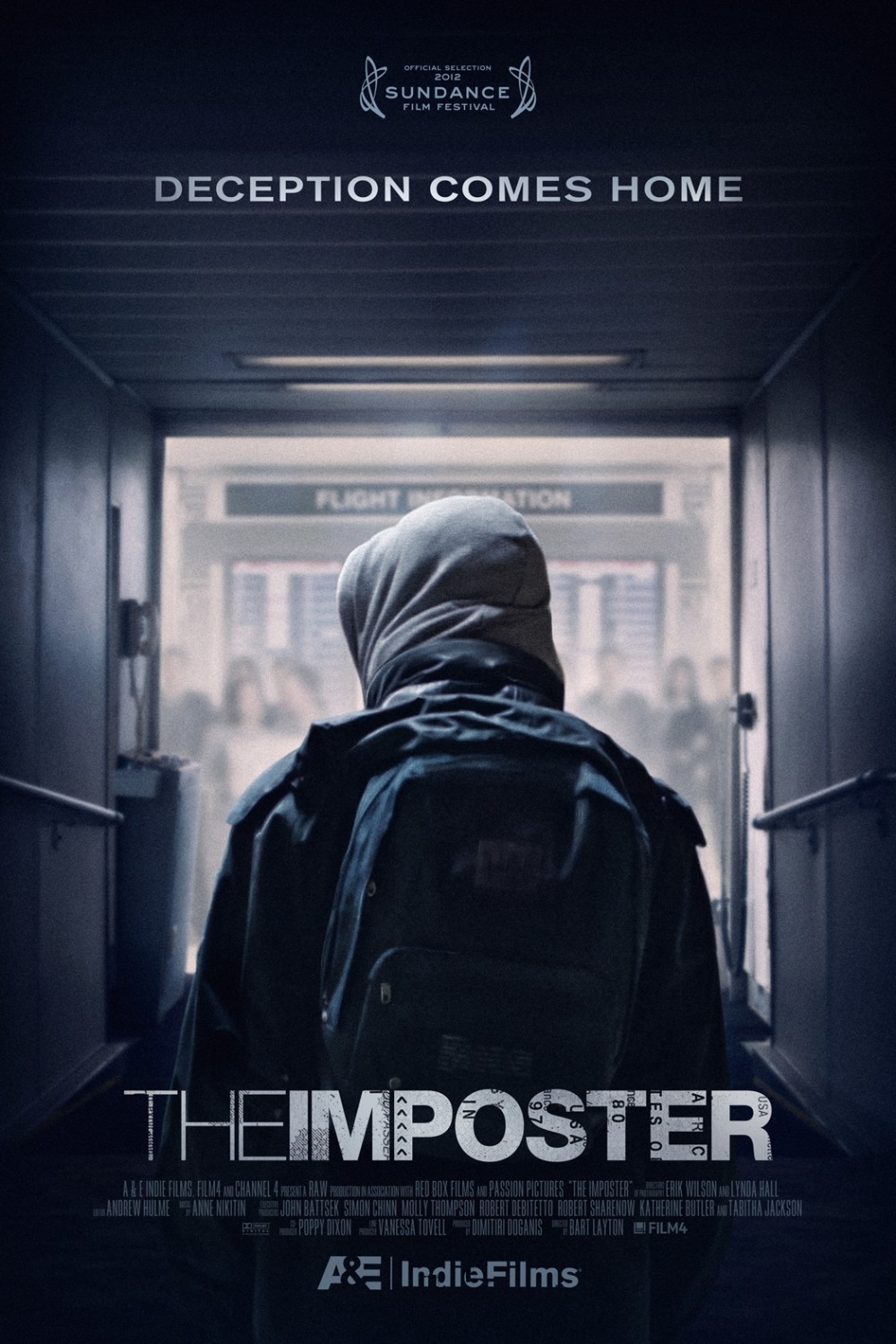
Short review: The imposter

Director: Bart Layton
(2012)

The Imposter is a documentary for those who don’t like documentaries, thanks to its excellent use of recreated scenes. The Imposter tells the story of Nicholas, a 13 year old boy who goes missing in 1993. He’s found 4 years later in Spain, complete with a different accent and a change in eye colour. Using interviews from the family of the victim and the FBI, director Bart Layton creates a truly memorable insight into the lives of those affected. Early on the film establishes that Nicholas has indeed been impersonated, and the culprit acts as our narrator as events head down a dark road. The film never feeds its audience one explanation, but offers conflicting viewpoints on who is actually telling the truth. Its lack of conclusive answers leaves a slightly sour aftertaste, but this merely reflects the reality of such an extraordinary situation.


Tuesday, 19 March 2013

We Bought a Zoo review


Benjamin Mee: You know, sometimes all you need is twenty seconds of insane courage. Just literally twenty seconds of just embarrassing bravery. And I promise you, something great will come of it. 

Director: Cameron Crowe
(2011)
If films were judged solely on their opening 20 minutes, there’s no doubt in my mind that We Bought a Zoo would be thrown on the trash heap by the majority of people. Despite or protagonist Benjamin (Matt Damon) being shown flying through hurricanes and interviewing world powers, the film couldn’t have been more drab even if it tried. Soon, conventional boxes are being systematically ticked, a flaw that continues right up until the films credits. Yet those who wait out this dreary opening will be in for a treat of sorts; a film that's completely predictable yet imbued with some magical moments about family and adventure.

Benjamin Mee is a renowned writer and family man, struggling to hold his children together after the death of his wife. His troubles looking after daughter Rosie (Maggie Elizabeth Jones) are amplified by the rebellious streak of his son Dylan (Colin Ford), the one who seems to be grieving the most. In an attempt to get away from it all and move on with his life, Benjamin purchases a house that comes with a zoo and plans to revive it in time for the summer season. He’s helped by Kelly (Scarlett Johansson), a lifelong worker at the zoo as they battle against time and money constraints in what proves to be Benjamin’s greatest adventure of all.


What helps ground the film is Damon’s performance as the struggling widowed father of 2 difficult children. He brings his A game here, Cameron Crowe’s solid direction coaxing out an emotionally varied effort. In some of the films more intense interactions-Bens arguments with his son for example- Damon is on top form, turning a moment of conflict into one of fierce paternal passion. The remainder of the cast are solid, even Johansson, who hasn’t been this good since 2004’s Lost in Translation. Elle Fanning is passable as Dylan’s love interest, but the role is wasted on a talent of her calibre. The other notable performance comes from Thomas Hayden Church as Bens caring and compassionate brother. Hayden Chruch is at his best here when paired with Damon; the brotherly conversations do a wonderful job of fleshing out Ben’s recent tragedy.

What really damages the quality of We Bought a Zoo is how incredibly predictable everything is. From the moment the zoo is bought, it’s easy to see how the plot will unfold. Just by simply paying attention it’s possible to see developments from a mile away, the dual romance brewing between Dylan and Lily and Ben and Kelly renders some interesting scenes completely flaccid. Crowe spends most of his time following a well worn path, attempting to make sure the film stays fluffy in tone even when death is the primary topic of the scene. It stops the finished product from being too saccharine sweet, but the more serious issues the film focuses on are rendered somewhat trivial at times. This still isn’t the films biggest flaw however, that dishonour goes to the moody teenager plot arc, one that’s so poor it tears the films overall quality down a few notches. The temper tantrums of Dylan make him whiney and somewhat idiotic preventing us from gaining any sympathy for his character.


Still, moving the multitude of flaws to the side, We Bought a Zoo does exactly what it’s supposed to; put a smile on the faces of its audience. By correctly implementing an uplifting finale coupled with a wonderful soundtrack by Jonsi, makes the films slog of an opening feel somewhat worthwhile. It will never be in a conversation regarding Crowe’s best films, but We Bought a Zoo is nonetheless an enjoyable film with universal appeal.