Friday, 22 March 2013

The Dark Knight review


The Joker: It's simple, we kill the Batman. 

Director: Christopher Nolan
(2008)
Over 4 years on, it’s easy step back and observe the effect that The Dark Knight has had on the superhero genre, as well as films on the whole. When one thinks of comic book adaptations, crappy effects, shoddy dialogue and men in ridiculous rubber suits all unfortunately spring to mind. But Christopher Nolan has changed such a trite genre for the better. After sowing the seeds of change with 2005’s Batman Begins, he blossoms this hard work into a truly fine effort, the genre transcending blockbuster that is The Dark Knight.

18 months after Batman Begins, Gotham is becoming cleaner, criminals fear the night and thanks to The Batman (Christian Bale) the city is relatively safe. Through the combined efforts of The Dark Knight, Lt Gordon (Gary Oldman) and district attorney Harvey Dent (Aaron Eckhart), mob bosses are slowly losing their grip on the underworld. Things change dramatically with the arrival of The Joker (Heath Ledger), an insane and formidable adversary, hell bent on bringing Gotham and Batman to their knees. As the Jokers mania spreads, Bruce Wayne must push his alter ego to the very limit in order to protect those closest to him, namely butler Alfred (the always sublime Michael Caine) and attorney Rachel Dawes (Maggie Gyllenhaal, replacing Katie Holmes).


If fear was the central theme of Batman Begins, then The Dark Knight is fuelled by unpredictable Chaos, a tone that Nolan sets from the get go. A 6 man bank heist is orchestrated, complete with a multitude of double crosses and the reveal of our scene stealing antagonist. From this stunning scene on, Nolan doesn’t let up. Explosions, chases, brawls and city wide pandemonium act as the fuel to a mesmerising film which pushes its genre, and filmmaking in general into bold new territory. This is in equal parts due to the dark, gritty tone, shooting key scenes in the ultra sharp IMAX format and The Joker himself, excellently portrayed by the late, great Heath Ledger.

While Batman Begins was no slouch in the acting department thanks to a strong assemble of talent, the performance that will be remembered for years to come is Batman’s most infamous foe. Ledger knocks it out of the park as the psychotic clown, his excellent dialogue delivered in such a zany, mesmerising manner that we almost forget that the caped crusader is indeed the star of the film. Ledger’s career has been a fine one, but this is what he’ll be rightfully remembered for.


The dark knight marks the start of a new phase of Nolan films, no longer restricted by budget; he is able to craft his film to fit his vision. Going against the grain when it comes to superhero films, the use of CGI here is kept to a minimal, with practical effects being used as often as possible. So when a bus crashes through a wall, a truck gets flipped on its head or a car gets destroyed, we’re seeing it actually happen. Such a practical approach is even used in bigger situations, the Jokers demolition of Gotham hospital is done for real, right down to the roof crumbling to the floor.

Taking an almost Spielbergian approach to set pieces, Nolan once again defies modern convention by showing us as much of the action as possible. The camera doesn’t shake around violently but remains smooth, framing the action so we as an audience can digest each punch and explosion. The editing is sound in this respect too, scenes are relatively long; nothing gets shredded into incomprehensible blur like other, lesser offerings. For the most part this works wonderfully, but there are moments when this directorial choice is a detriment to the overall quality of the film. Take Batman himself, dishing out hefty blows to Gotham’s criminals and the Jokers goons. It looks realistic, but the slow nature of Bales movement makes him appear sluggish in his brawls. It’s not a monumental issue, but it paints the caped crusader as a lumbering brute rather than the agile ninja that he truly is.


There is little doubt that The Dark Knight is a masterstroke in filming, a delicious concoction of old school philosophies and convention obliterating plot twists. But like all of Nolan's films, even those seemingly designed to be watched more than once (Inception), the film doesn’t lend itself well to multiple viewings. If The Dark Knight is watched once, and only once, it’s a 10/10 film in every regard. Viewing it a second time is a lessened experience however, and the narrative creaks under its gargantuan weight. Both Two Faces rampage and the ferry sequence seem rushed and implausible. It’s still a terrific film, but the magic it generates when viewing for the first time is an unrepeatable feeling. Regardless, this is bound to go down as Nolan's masterpiece, the great second act in a genre redefining trilogy.


Wednesday, 20 March 2013

The Walking Dead Season 3 Episode 13: Arrow on the Doorpost


!!!!!!WARNING SPOILERS!!!!!!

CLICK TO VIEW


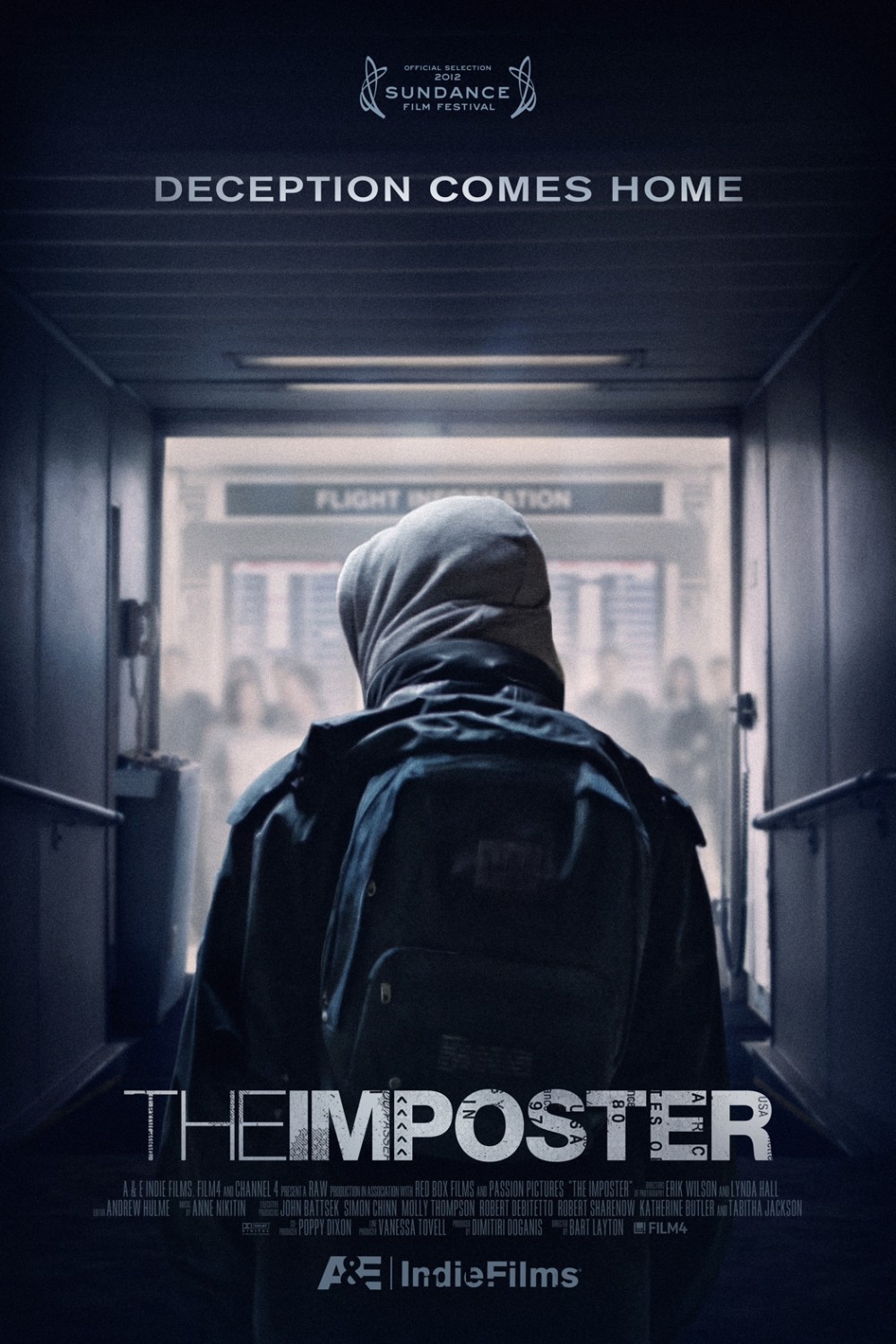
Short review: The imposter

Director: Bart Layton
(2012)

The Imposter is a documentary for those who don’t like documentaries, thanks to its excellent use of recreated scenes. The Imposter tells the story of Nicholas, a 13 year old boy who goes missing in 1993. He’s found 4 years later in Spain, complete with a different accent and a change in eye colour. Using interviews from the family of the victim and the FBI, director Bart Layton creates a truly memorable insight into the lives of those affected. Early on the film establishes that Nicholas has indeed been impersonated, and the culprit acts as our narrator as events head down a dark road. The film never feeds its audience one explanation, but offers conflicting viewpoints on who is actually telling the truth. Its lack of conclusive answers leaves a slightly sour aftertaste, but this merely reflects the reality of such an extraordinary situation.


Tuesday, 19 March 2013

We Bought a Zoo review


Benjamin Mee: You know, sometimes all you need is twenty seconds of insane courage. Just literally twenty seconds of just embarrassing bravery. And I promise you, something great will come of it. 

Director: Cameron Crowe
(2011)
If films were judged solely on their opening 20 minutes, there’s no doubt in my mind that We Bought a Zoo would be thrown on the trash heap by the majority of people. Despite or protagonist Benjamin (Matt Damon) being shown flying through hurricanes and interviewing world powers, the film couldn’t have been more drab even if it tried. Soon, conventional boxes are being systematically ticked, a flaw that continues right up until the films credits. Yet those who wait out this dreary opening will be in for a treat of sorts; a film that's completely predictable yet imbued with some magical moments about family and adventure.

Benjamin Mee is a renowned writer and family man, struggling to hold his children together after the death of his wife. His troubles looking after daughter Rosie (Maggie Elizabeth Jones) are amplified by the rebellious streak of his son Dylan (Colin Ford), the one who seems to be grieving the most. In an attempt to get away from it all and move on with his life, Benjamin purchases a house that comes with a zoo and plans to revive it in time for the summer season. He’s helped by Kelly (Scarlett Johansson), a lifelong worker at the zoo as they battle against time and money constraints in what proves to be Benjamin’s greatest adventure of all.


What helps ground the film is Damon’s performance as the struggling widowed father of 2 difficult children. He brings his A game here, Cameron Crowe’s solid direction coaxing out an emotionally varied effort. In some of the films more intense interactions-Bens arguments with his son for example- Damon is on top form, turning a moment of conflict into one of fierce paternal passion. The remainder of the cast are solid, even Johansson, who hasn’t been this good since 2004’s Lost in Translation. Elle Fanning is passable as Dylan’s love interest, but the role is wasted on a talent of her calibre. The other notable performance comes from Thomas Hayden Church as Bens caring and compassionate brother. Hayden Chruch is at his best here when paired with Damon; the brotherly conversations do a wonderful job of fleshing out Ben’s recent tragedy.

What really damages the quality of We Bought a Zoo is how incredibly predictable everything is. From the moment the zoo is bought, it’s easy to see how the plot will unfold. Just by simply paying attention it’s possible to see developments from a mile away, the dual romance brewing between Dylan and Lily and Ben and Kelly renders some interesting scenes completely flaccid. Crowe spends most of his time following a well worn path, attempting to make sure the film stays fluffy in tone even when death is the primary topic of the scene. It stops the finished product from being too saccharine sweet, but the more serious issues the film focuses on are rendered somewhat trivial at times. This still isn’t the films biggest flaw however, that dishonour goes to the moody teenager plot arc, one that’s so poor it tears the films overall quality down a few notches. The temper tantrums of Dylan make him whiney and somewhat idiotic preventing us from gaining any sympathy for his character.


Still, moving the multitude of flaws to the side, We Bought a Zoo does exactly what it’s supposed to; put a smile on the faces of its audience. By correctly implementing an uplifting finale coupled with a wonderful soundtrack by Jonsi, makes the films slog of an opening feel somewhat worthwhile. It will never be in a conversation regarding Crowe’s best films, but We Bought a Zoo is nonetheless an enjoyable film with universal appeal.


Friday, 15 March 2013

Drive review


Driver: There's a hundred-thousand streets in this city. You don't need to know the route. You give me a time and a place, I give you a five minute window. Anything happens in that five minutes and I'm yours. No matter what. Anything happens a minute either side of that and you're on your own. Do you understand? 
Director: Nicolas Winding Refn
(2011)
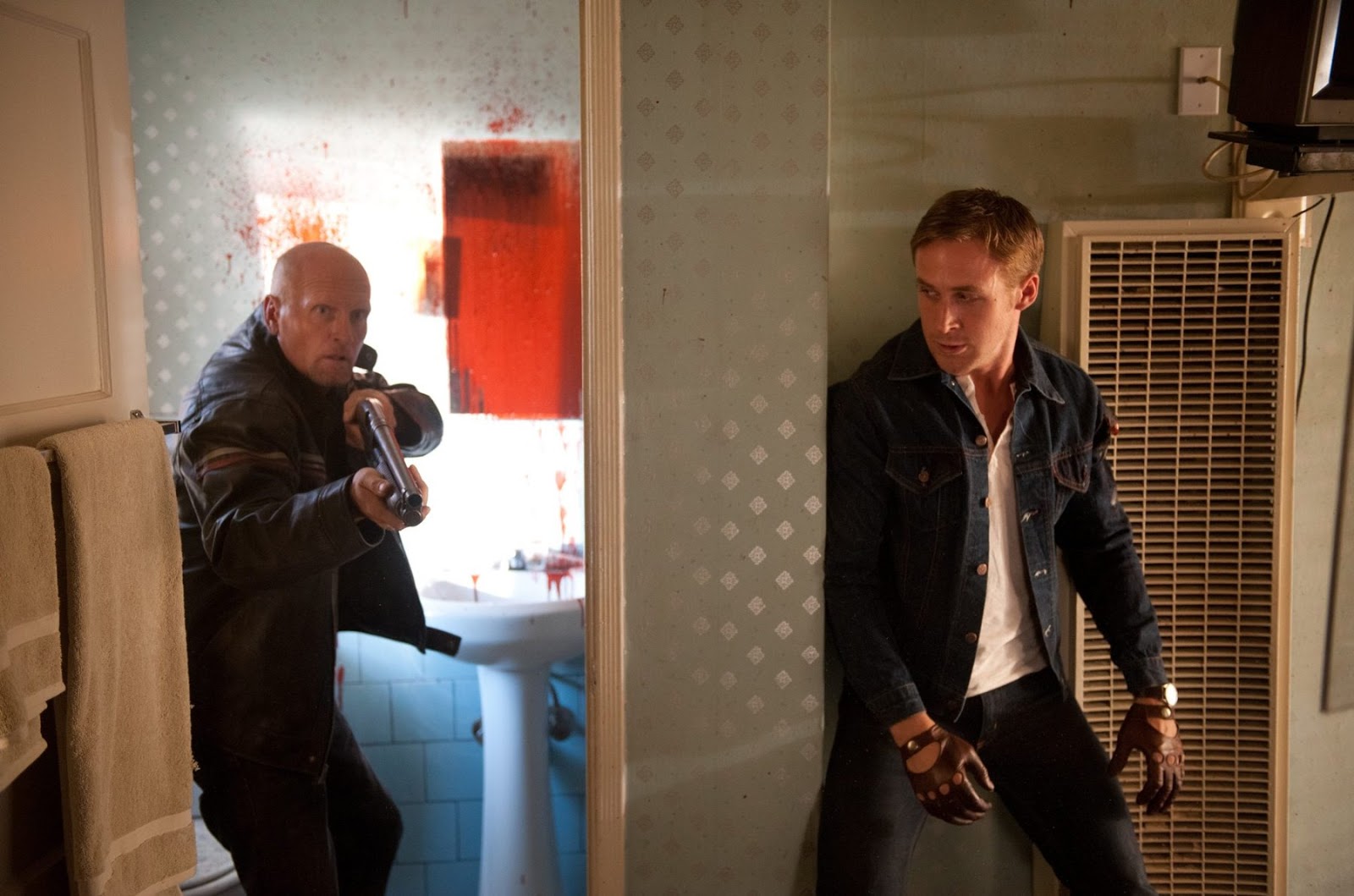
There is something about Drive that makes for a somewhat awkward viewing experience. Make no mistake, it’s an effortlessly stylish film, directed with such elegant precision by Nicolas Winding Refn, yet these factors don’t make for an easy watch. The cool as a cucumber 80’s vibe and mesmerising cinematography is almost unhinged by some incredibly odd encounters, as our chiselled protagonist ‘The Driver’ (Ryan Gosling) is as emotionally complex as he is socially incapable.

A stunt driver for films by day and expert getaway driver for the criminal underworld by night, The Driver exudes independence that maintains a distance between him and everyone in his life. His employer Shannon (Bryan Cranston) is a compassionate ally, even though such niceties fruitlessly rebound off of Goslings glacial 1000 yard stare. This enigma of a man opens up somewhat when he meets neighbour Irene (Carey Mulligan). The romance that is poised to blossom is abruptly interrupted by the return of Irene’s husband Standard (Oscar Isaac) fresh out of prison and a changed man. Standard owes the wrong people protection money, and in order to help Irene and son (Benicio) (Kaden Leos), The Driver opts to help him out, putting him on the wrong side of local gangsters Nino (Ron Perlman) and Bernie (Albert Brooks).


Drive is an interesting film for Winding Refn, who’s remembered for Valhalla Rising and the Pusher trilogy. It’s primarily a drama with a focus on The Drivers relationship with Irene and her son, but takes frequent forays into a multitude of other genres. The opening scene is a prime example of this, a getaway chase after a botched robbery by The Drivers clients. Despite the thrilling build-up of tension, the quick tick of a watch, the beep of the open door indicator and Goslings slight worry hidden under a face of complete coolness and control, the chase doesn’t involve loud cars and handbrake turns around corners. Instead we’re treated to something of an arthouse action scene as the driver evades patrol cars and helicopter spotlights before shaking the off the police by synchronizing the getaway with the finish of a local baseball match. There is no denying it’s is a sublime scene, but it doesn’t entertain in a conventional matter, very much setting the groundwork for the rest of the film.

Seeping from every pore of Drive is an innate coolness that is worked into every frame of the film. The Driver nonchalantly chews a toothpick for the most of the film, staring into space. Many of his encounters with other characters involve lots of silence and awkward eye contact. It’s almost a competition of sorts, who can pose in the most stylish way possible in order to make their on screen counterpart look inferior. This is largely due to a minimalistic script, in which dialogue is used as sparingly as possible. Each line is carefully chosen, almost as if he’s afraid to waste any words in a sentence. We don’t need to have Irene talk about her unhappy marriage when we can gain this information from her husband’s story about how they first met.


Augmenting the films ice cool attitude is its stellar soundtrack, a glorious sample of 80’s club techno that bursts into life at precisely the perfect moment. Its no secret the film wears it love of this bold decade for all to see-its title font for instance- but the choice of songs seem inspired. When Real Human Being fades in as the sun peaks into shot while Gosling and Mulligan drive down an abandoned storm drain, it feels like Winding Refn is in complete control; the master of his retro universe.

While Drive feels so very fresh faced in a crowd of getaway films, it occasionally stumbles when it turns to convention, a dull decision made worse by how unique the film actually is. A development in the second half makes the antagonists off screen east coast mobsters, an unseen presence that lazily drives the plot forward. This also demeans Perlman and Brook’s wonderful work as the bad guys, both of whom seem less of a threat when they themselves have their own, bigger enemies. The finale is also an issue, bordering on unsatisfying anticlimax. These factors coupled with the uneasy exchanges between characters makes the first viewing of Drive is relatively hit and miss, though this shouldn’t be a deterrent for watching the film a second time. The more times it is seen the more it can be understood, and this layered approach is partly what makes Drive on of the best films of 2011.


Thursday, 14 March 2013

Short review: Triangle

Director: Christopher Smith
(2009)

There are so many things to be said about Triangle, yet so little of it can actually be communicated. Triangle is a relatively unknown psychological thriller masquerading as a dumb horror. Unlike others in this subgenre, Triangle twists and turns not to set up a 3rd act plot twist, but to develop its revelation that occurs in the 1st act. 30 minutes in and things are looking grim, the cast is tiny in size and obtuse clues point towards our heroine Jess (Melissa George) being insane. An in a flash director Christopher Smith turns the film on its head, with the ocean liner our protagonists are stuck on becoming almost as intriguing as the Overlook Hotel. While its narrative complexity causes some convolution, Triangle is a very solid film, intent to cater to the more cerebral horror fans. A smart, satisfying film that deserves a lot more recognition.


The Walking Dead Season 3 Episode 12 review: Clear


!!!!!!WARNING SEASON 1 AND 3 SPOILERS!!!!!!
CLICK THE LINK TO VIEW


The Grey review


Ottway: A job at the end of the world. A salaried killer for a big petroleum company. I don't know why I did half the things I've done, but I know this is where I belong, surrounded by my own. Ex-cons, fugitives, drifters, assholes. Men unfit for mankind. 

Director: Joe Carnahan
(2012)
Whatever you think you know about The Grey needs to be forgotten instantly. Despite what the trailers want you to believe, this isn’t a film about Liam Neeson being an unstoppable badass who has a penchant for punching wolves in the face; Taken set in the wilds of Alaska if you will. Director Joe Carnahan’s latest is nothing of the sort. Instead we’re served a survival film as much about man vs. environment as it is man vs. killer wolf. Make no mistake, The Grey isn’t particularly realistic, but is redeemed by some strong core components that make for an enjoyable final product.

What instantly scuppers any preconceptions of The Grey is the opening monologue from Neesons Ottway, a letter to a loved one who he is no longer with. This written poetry is backed up with some evocative shots of the unforgiving Alaskan landscape, as smoke gently rises out of chimneys into the pitch black sky. Ottway is a wolf hunter, employed to keep the other men- of which he describes as Ex-cons, fugitives, drifters and assholes – safe. Before a plane leaves to take everybody home, Ottway puts his rifle in his mouth, intent to pull the trigger. His distressing action is stopped by the cry of a wolf in the distance, the irony not immediately apparent. He chooses to board the plane, only for it to crash in the wilderness, forcing him and 6 other survivors to fend off against a pack of deadly wolves all while searching for rescue.


What helps keep The Grey fresh through its 2 hour running time is director Joe Carnahan’s ability to successfully straddle multiple genres. The plane crash and resulting aftermath are indicative of various survival films, as the oil workers battle the elements to rescue the injured and remain as warm as possible. Within 10 minutes it’s an action flick as Ottway gets mauled by the wolves in the surrounding area. By nightfall, things shift towards horror, the wolves eyes shimmer from the abyss of darkness that surrounds our protagonists. While the survival aspects aren’t realistic enough, the action too poorly shot and the horror relatively unfrightening, Carnahan gives just the right amount of development on each. The result is a film that's far greater than the sum of its parts.

While the characters won’t be remembered for their names, the film packs a strong punch around a campfire at the midway point, as our protagonists tell each other stories to quell the fear of an impending wolf attack. Carnahan makes us care, as these broken men talk about their families and children and their longing to see them again. Such a tender moment is shattered in my head and despite its opening monologue and survival aspects, The Grey eventually boils down to a horror film; I know these people won’t make it to the end. It’s a surreal emotion, films like this are usually populated by empty stereotypes, and the last time I yearned for the entire cast of a horror film to survive to the credits was James Cameron’s Aliens.


The intensity of the survivors descent into the barren tundra is proliferated by some sound technical work; a quality blend of CGI and practical effects. The wolves are an interesting blend of animation and puppetry, courtesy of The Walking Dead’s makeup maestro Greg Nicotero. While the CG isn’t much cop, it is well hidden by shadows and snowstorms, an attempt at the ‘less is more’ approach. The puppets and models work better, the threat feels more real to a much larger degree. What's even more impressive is the strong sound design that augments the wolves’ feral and dangerous nature. Why show your audience when you can force them to hear ravenous growls hiding under the cover of darkness?

For all its strengths, The Grey is bound to be remembered for its failings. In reality, wolves aren’t nowhere near as malicious as they're portrayed here, and the harshness of the wilderness would’ve killed the survivors in hours due to their inability to look after themselves. Some dodge this by stating the wolves are a metaphor and the environment represents purgatory, but these arguments are weak when compared to how much the film does get correct in these regards. It needs to be taken with a fairly large dosage of salt, but The Grey is a fine survival drama, with Neeson at his best since Batman Begins.


Tuesday, 12 March 2013

Short review: Tucker and Dale Vs Evil

Director: Eli Craig
(2011)

Despite being totally stupid, there’s something so gratifying about Tucker and Dale Vs Evil. Seemingly tired with modern horror films, Director Eli Craig has crafted a fine satire that spends its time poking fun at a genre that is conventional to the point of predictability. Tucker and Dale are 2 beer loving rednecks who buy a woodland cabin as a holiday home, only to be attacked by a group of ignorant college kids our duo rescue their beautiful friend (Katrina Bowden) from drowning. What makes the film so fresh is the change of perspective, we see through the eyes of the supposed ‘villains’; good, honest men who’re misunderstood by today’s idiotic youth. Soon the gore and humour flow freely, but the film is on a slow descent by the end of the first act, the runtime unfortunately outlasts the smart, fresh concept.


Friday, 8 March 2013

The Perks of Being a Wallflower review


Charlie: I really wanna be a writer but I don't know what I'd write about. 
Sam: You can write about us. 
Patrick: Call it 'The slut and the falcon' make us solve crimes 

Director: Steven Chbosky
(2012)
2012 has been a surprisingly strong year for film. The brilliance has ranged from the explosive (The Dark Knight Rises), the clever (Looper) and the magical (Life of Pi). With such quantity in the quality of mainstream films, scores and scores of smaller, but no less entertaining films get pushed aside in cinema listings, unfairly overlooked. The Perks of Being a Wallflower is one of these films.

Perks focuses on Charlie (Logan Lerman) a troubled teenager who is about to go to a public school for the first time due to being homeschooled all his life. Through a letter for his anonymous friend he narrates his journey, offering insight to his mental condition and his feelings to how his life is unfolding. After a few days struggling being the new kid, Charlie befriends Patrick (Ezra Miller) and his half sister Sam (Emma Watson), 2 constantly quirky seniors who take him under their sheltering wing. Soon Charlie breaks free from his shell as he takes a journey to the end of his childhood that exposes who he truly is.


While Perks is most definitely a coming of age story, it’s not fuelled by adventure (the Goonies) or vast amounts of self discovery (Stand by Me). Yes, Charlie does find his place in the animal kingdom that is high school, but he adapts to fit his environment, spurred on by his need to feel normal. Despite his mental condition, Lerman makes him almost universally likable; everyone has moments of loneliness or longing while growing up. This urge to gain the respect of your peers is what Writer/Director Steven Chbosky channels constantly, a thematic choice that allows Charlie’s sometimes strange behaviour to have little impact on how relatable he is.

The trio of Lerman, Watson and Miller make up the core experience in Perks, and each is a perfect match for their characters. Watson is sublime in her first post Potter role as Sam, Charlie’s potential love interest and guide through his progression from near silent protagonist to eccentric socialite. She’s a sublime blend of dependable and seductive, although not without some serious baggage. Her brother Patrick is similar in many ways, his idiosyncratic lifestyle and warm demeanour is offset by his struggles with his hidden relationship with Brad, a fellow student with an urge to remain secret about his sexuality.


It’s in these more serious vibes that Perks suffers from its poor change in tone. One scene will consist of fun humour and engaging scenarios, only for child abuse and violent homophobia to rear their startling heads in the next. What's even more terrifying is how casually such themes are handled and the flip-flopping between styles is exceedingly uncomfortable at times. These dark moments are totally necessary, but are downplayed far too casually. The use of drugs fares much better, from a nervous Charlie eating a brownie at his first house party and getting stoned, winning him a great amount respect to doing LSD and falling asleep in the snow. Chbosky’s delicate comic touch works in the case of substance abuse but his attempts to brush other issues of so nonchalantly is detrimental to the quality of the film.

While it does tick most of the boxes of its genre, The Perks of Being a Wallflower never feels stale or derivative. There are enough jokes, relationships and chemistry between the 3 leads for the entirety of the film to work sufficiently. Chbosky’s handling of mature themes is haphazard at best and atrocious at worst, a flaw amplified considering he wrote the book the film is based upon. It may lack that powerful aura of youth that something like Stand by Me has, but that doesn’t stop Perks from being a hidden gem in a year of strong films.


Thursday, 7 March 2013

The Walking Dead Season 3 Episode 11: I Aint a Judas


!!!!!!WARNING SEASON 2 AND 3 SPOILERS!!!!!!

CLICK THE LINK TO VIEW

Short review: Big Fat Gypsy Gangster

Director: Ricky Grover
(2011)

I'm still not quite sure what inspired me to watch a film called Big Fat Gypsy Gangster. I think I was hoping to watch a film so bad its good, but I couldn’t have been more wrong. A sort of mockumentary, an American film crew follows a recently released British gangster called Bulla. The film initially focuses on his attempt to regain his empire, but loses focus and goes on about mystics and dwarf fighting arenas. The acting is weak despite some decent names, destroyed by a dire script that's light on actual laughs. After a funny opening 5 minutes, the film resorts to cock gags and racial profiling, both of which aren’t funny in the slightest. It even fails as a mockumentary, ignoring its genres rules: it’s not even shot correctly. From directing to editing, Big Fat Gypsy Gangster is an abysmal film.